Vase from the Porceleyne Fles
The restoration of a vase produced by the Porceleyne Fles in Delft.
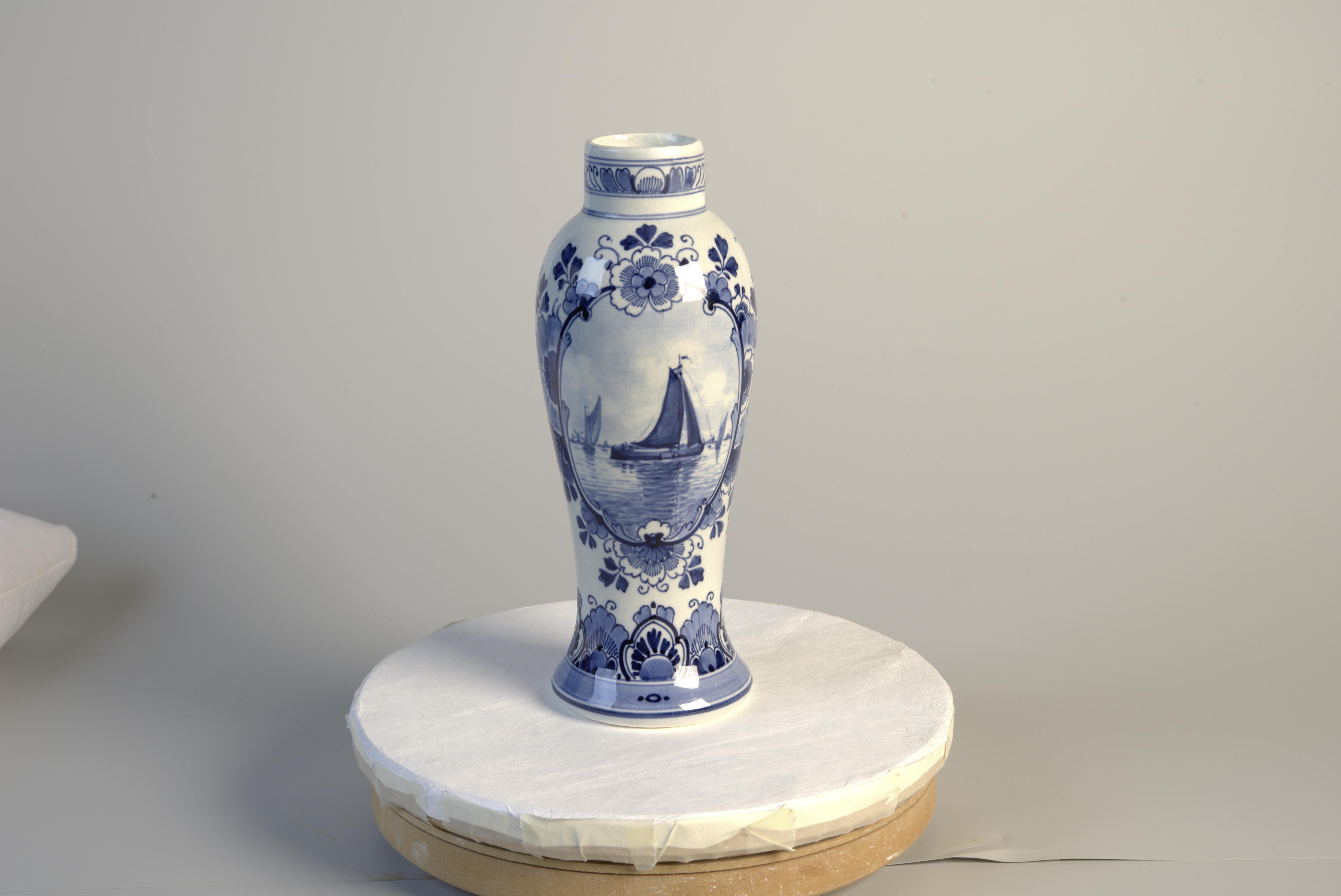
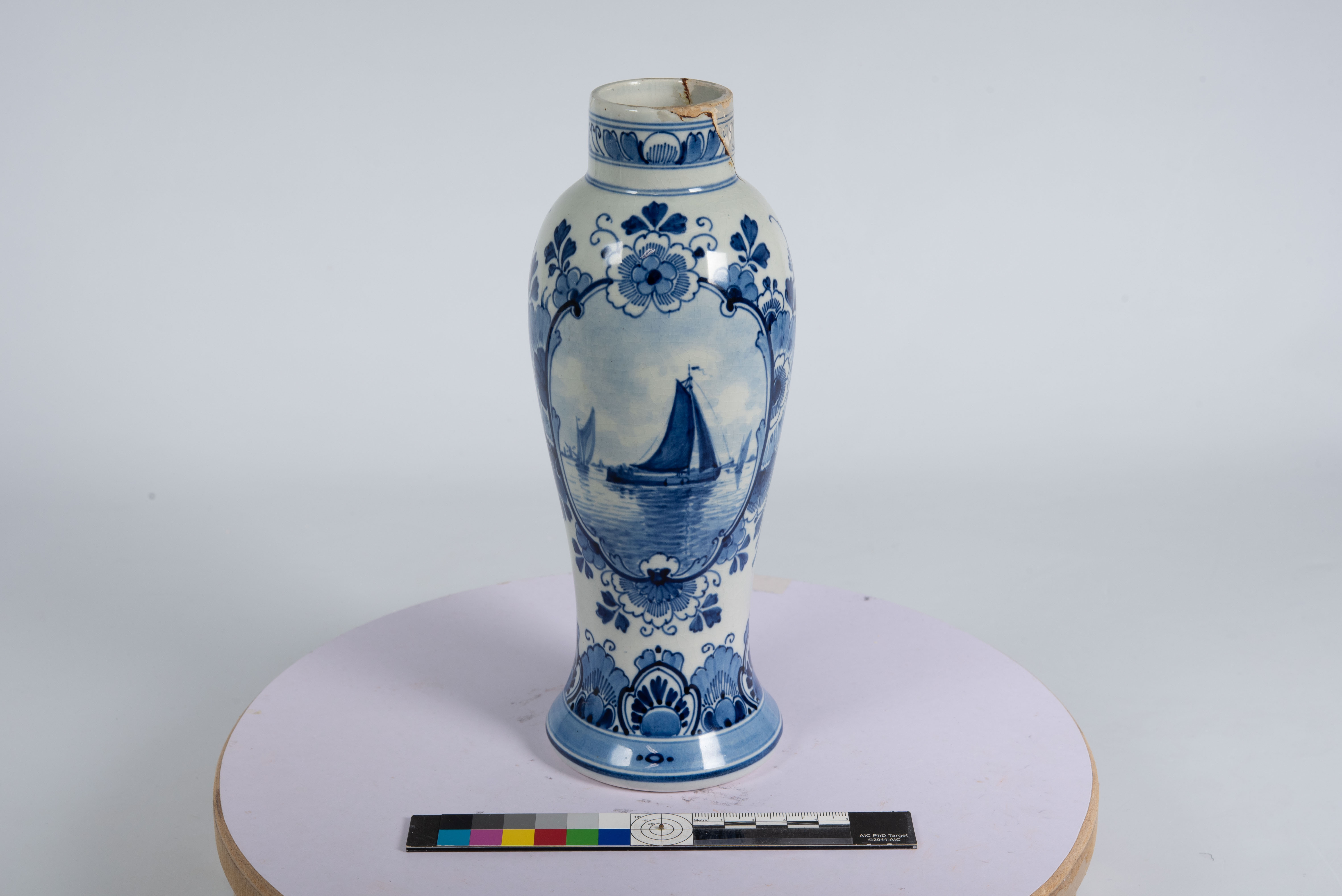
Figure 1: The vase before and after restoration.
Project Details
- Object owner: Private collectie
- Date: 1910
- Period: 20e eeuw
-
Dimensions:
- Hoogte: 22,5 cm
- Diameter: 8,2 cm
-
Materials:
- Aceton
- Anutex Dental Modelling Wax
- Ethanol
- Golden Fluid Acrylics & Gloss Porcelain Restoration Glaze
- Klucel H
- Modelgips
- Paraloid B-72
Conservation treatment
This vase was made by the Porceleyne Fles in 1910, as determined by the signature and yearcode on the bottom. It was produced using a two-sided mould; a vertical seam is visible where the sides met. The vase has an underglaze blue cobalt oxide decoration and was fired at a maximum temperature of 1140°C. The cartouche on the front depicts several sailboats, painted by Pieter Cornelis Marinus de Fouw, who worked at the Porceleyne Fles from 1883 to 1931. On the rim, a piece had broken off and been replaced with a painted fill. Some original material remained within this fill, but extensive overpaint made it impossible to assess how much. As the fill was poorly executed and the adhesive had severely discoloured, it was decided to remove and replace it.
It was decided to remove the old fill and make a new one. To see how the discoloured adhesive could best be removed, several tests were conducted. It was found that aceton was most effective in removing the old adhesive, followed by ethanol. To elongate the contact time of the aceton with the adhesive it was made into a gel with 5% Klucel H, since this does not gel properly with pure acetone a solution of 9:1 of aceton:ethanol was used. This made it possible to remove of the old fill, after which the break edge was repeatedly cleaned with an acetone / ethanol solution and a steam cleaner until it was significantly less orange.
After the break-edge was cleaned, it was consolidated using a 5% Paraloid B-72 in acetone solution. The small piece of original material that was first embedded in the old fill was attached to the vase using a 38% Paraloid B-72 in acetone solution to which a small amount of fumed silica was added to improve the rheological properties. To make the new fill a one sided mound was made of the rim opposite of the lacuna using Anutex dental modelling wax. This mould was placed ofter the lacuna and was filled with modelling plaster to make the fill.
The new fill was retouched with an airbrush using Golden Fluid Acrylics and Golden Gloss Porcelain Restoration Glaze. In the first place an opaque layer was applied which extended just over the break-line to blend in the fill with the vase. After this the decoration was build up in several more transparent layers to recreate the depth of a glaze. The retouching was finished by applying a thicker layer of pure Golden Gloss Porcelain Restoration Glaze to mimic the glossiness of the original glazing.
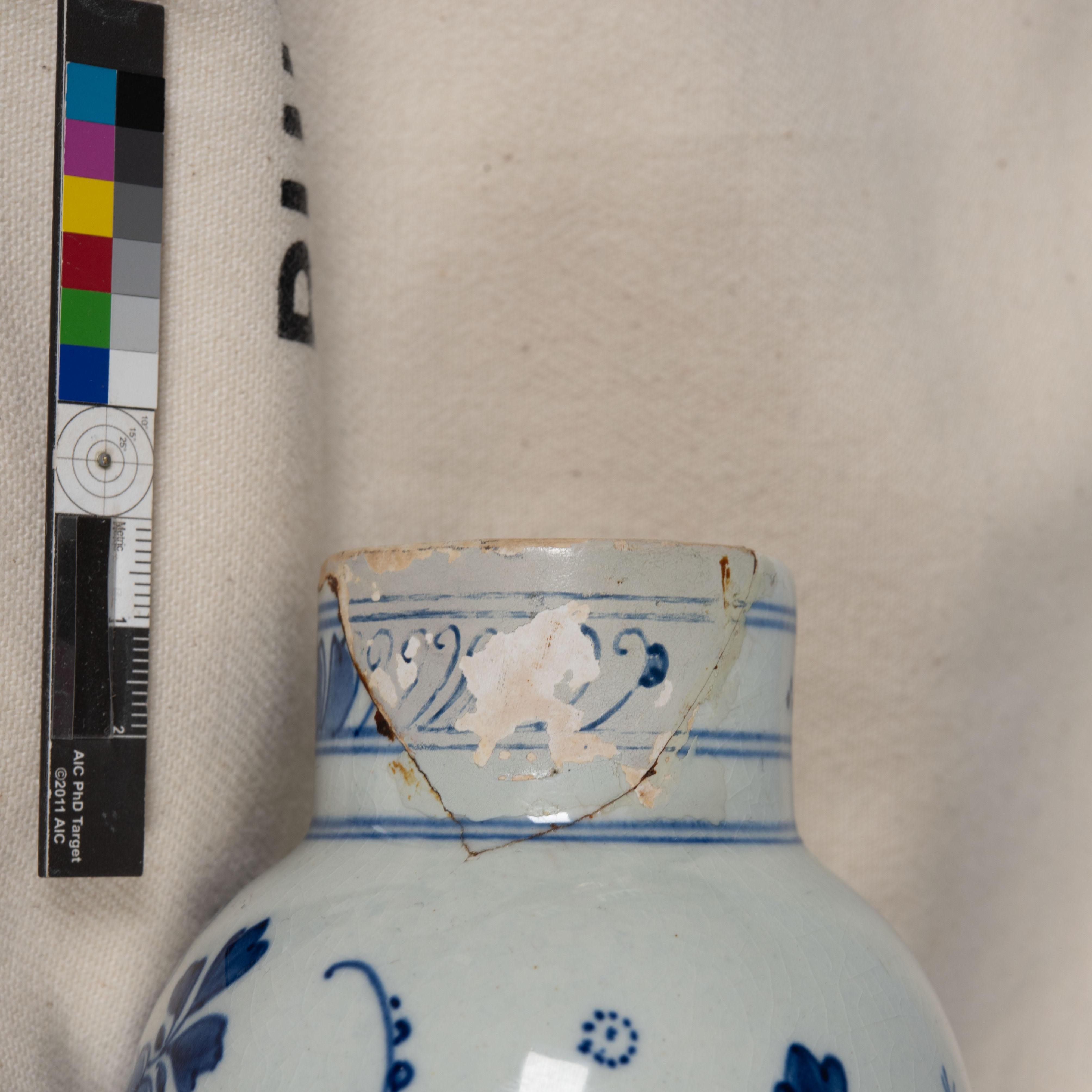
Figure 2: Close up of the fill before restoration.
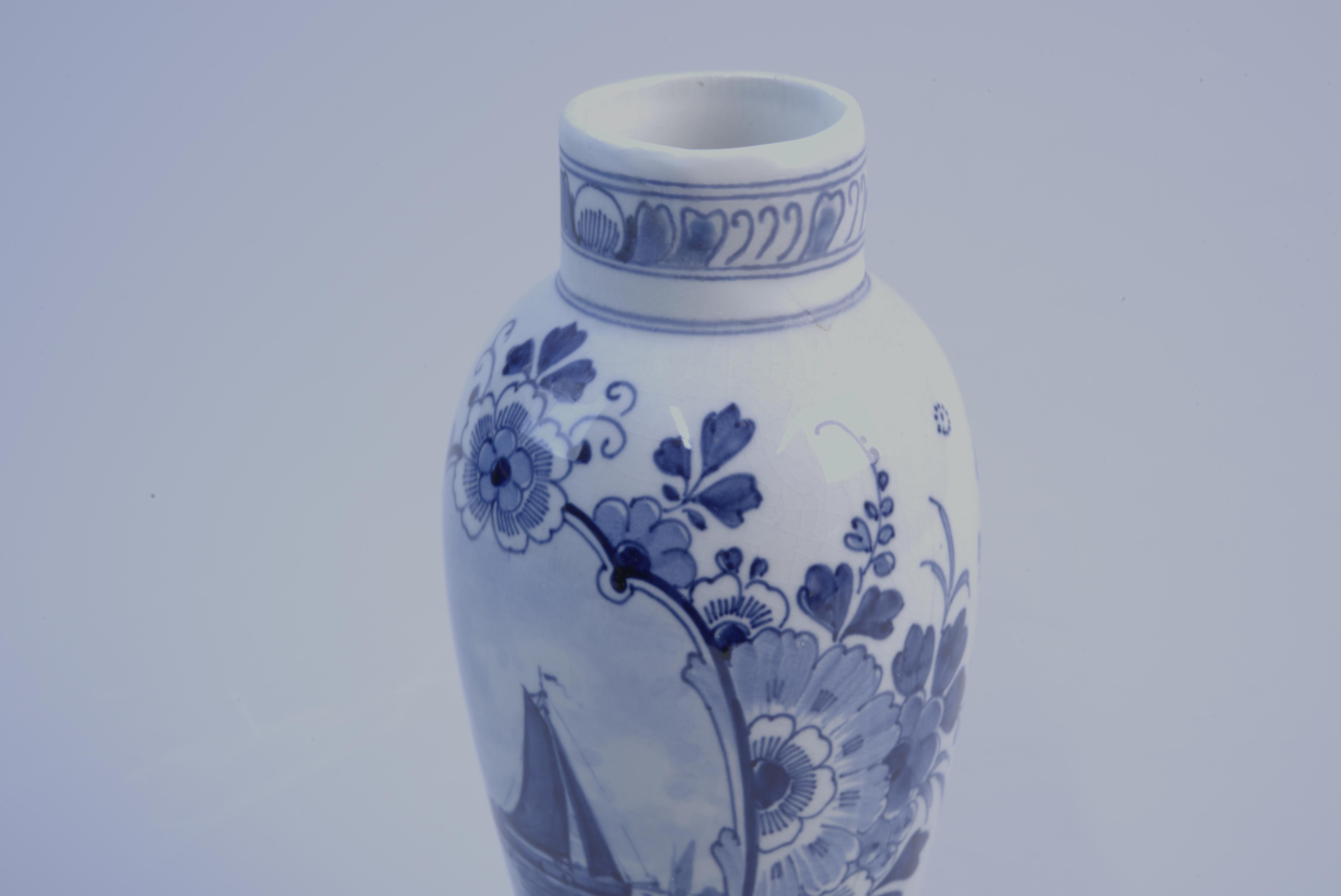
Figure 3: Close up of the new fill after restoration.