The Pelican
Restoration of a sculpture resembling a Northern Gannet, in the collection wrongly named Pelican, made by the Dutch artist Johannes Hilbers in 1967.
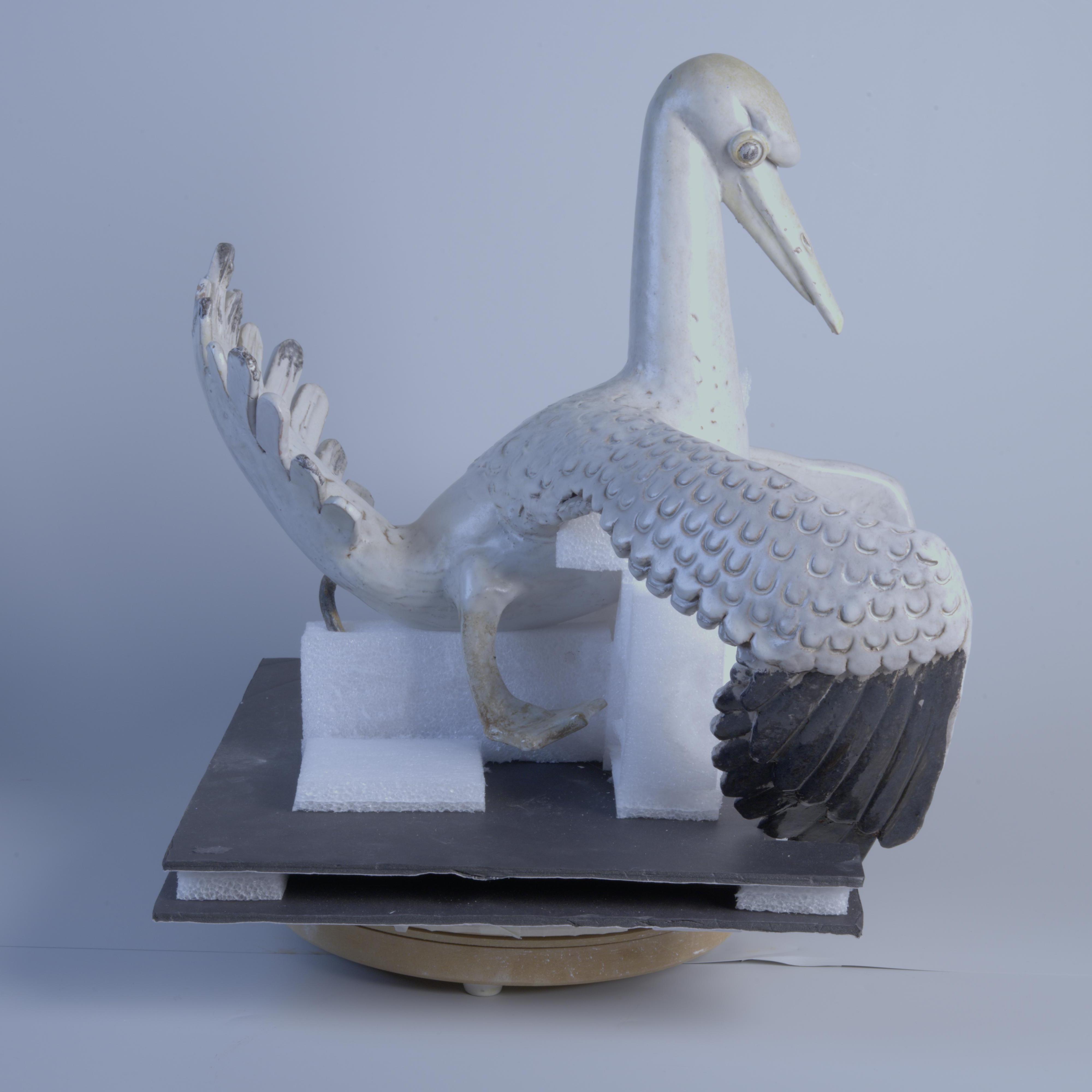
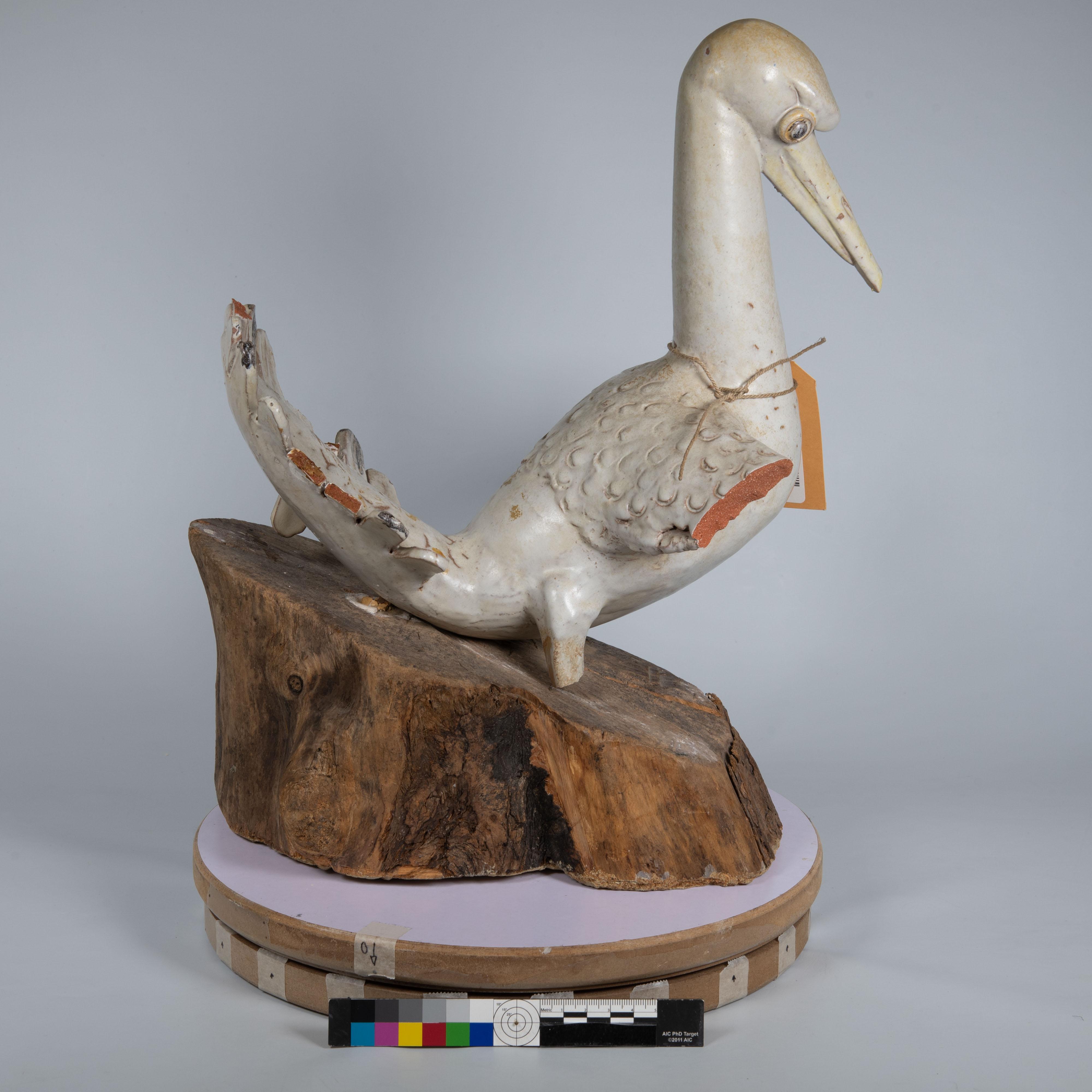
Figure 1: The before and after image of the sculpture taken from the left side.
Project Details
- Object owner: Rijksdienst Cultureel Erfgoed (RCE)
- Date: 1967
- Period: 20e eeuw
-
Dimensions:
- Hoogte: 38.5 cm
- Breedte: 37.5 cm
- Diepte: 37 cm
-
Materials:
- Paraloid B-72
- Laponite RD
- Pigmenten
- Golden Gloss Porcelain Restoration Glaze
- Golden Fluid Acrylics
Restoration treatment
This hand-modelled earthenware bird, made by Johannes Albertus Hilbers in 1967 from the collection of the Rijksdienst voor Cultureel Erfgoed (RCE), had been broken into eight pieces for at least 30 years. Both wings and both feet were detached, several tail feathers were broken or missing entirely, and earlier repairs had failed and come apart again. Old yellowed adhesive and overpaint were spread across the tail, and the inventory numbers had been written with permanent marker over a layer of varnish along each break edge — varnish that had soaked into the porous, low-fired ceramic and would weaken any new bond. The figure was pinned to a cracked wooden base by a corroded iron rod set in an adhesive.
The first challenge was simply freeing the bird from its base. The mounting adhesive refused to dissolve in acetone, ethanol or benzyl alcohol. In collaboration with the Rijksmuseum Amsterdam, it was decided to take X-ray images to understand how the rod was exactly positioned in the wood and the ceramic. With the owner's agreement, a small part of the base, widening the hole around the rod with a drill until the sculpture could finally be lifted clear.
With the figure detached, the overpaint, old adhesive and obscuring object numbers were cleaned using acetone on cotton swabs, alongside laponite poultice tests to draw varnish out of the break edges. Before reassembly, the shear stress the heavier wing would place on its joint was calculated and it was confirmed that Paraloid B-72 would be able to hold it. The edges were consolidated with a 5% Paraloid B-72 in acetone solution to strengthen the porous body, then the pieces were bonded with a 38% Paraloid B-72 and fumed-silica mixture, building each wing up before joining it to the body.
The three missing tail feathers were recreated with pigmented thermocasts of Paraloid B-72, taken from silicone moulds and toned to match the ceramic. Final retouching was carried out in Golden fluid acrylics and finished with an airbrush to blend the fills into the surrounding glaze. A satisfying discovery along the way: the bird, long catalogued as a pelican, is almost certainly a Northern Gannet (Jan-van-gent), which also confirmed that the yellow markings on its head are original material. The sculpture was returned stabilised and complete, with handling and storage guidance and a recommendation to have the cracked base assessed by a furniture conservator.
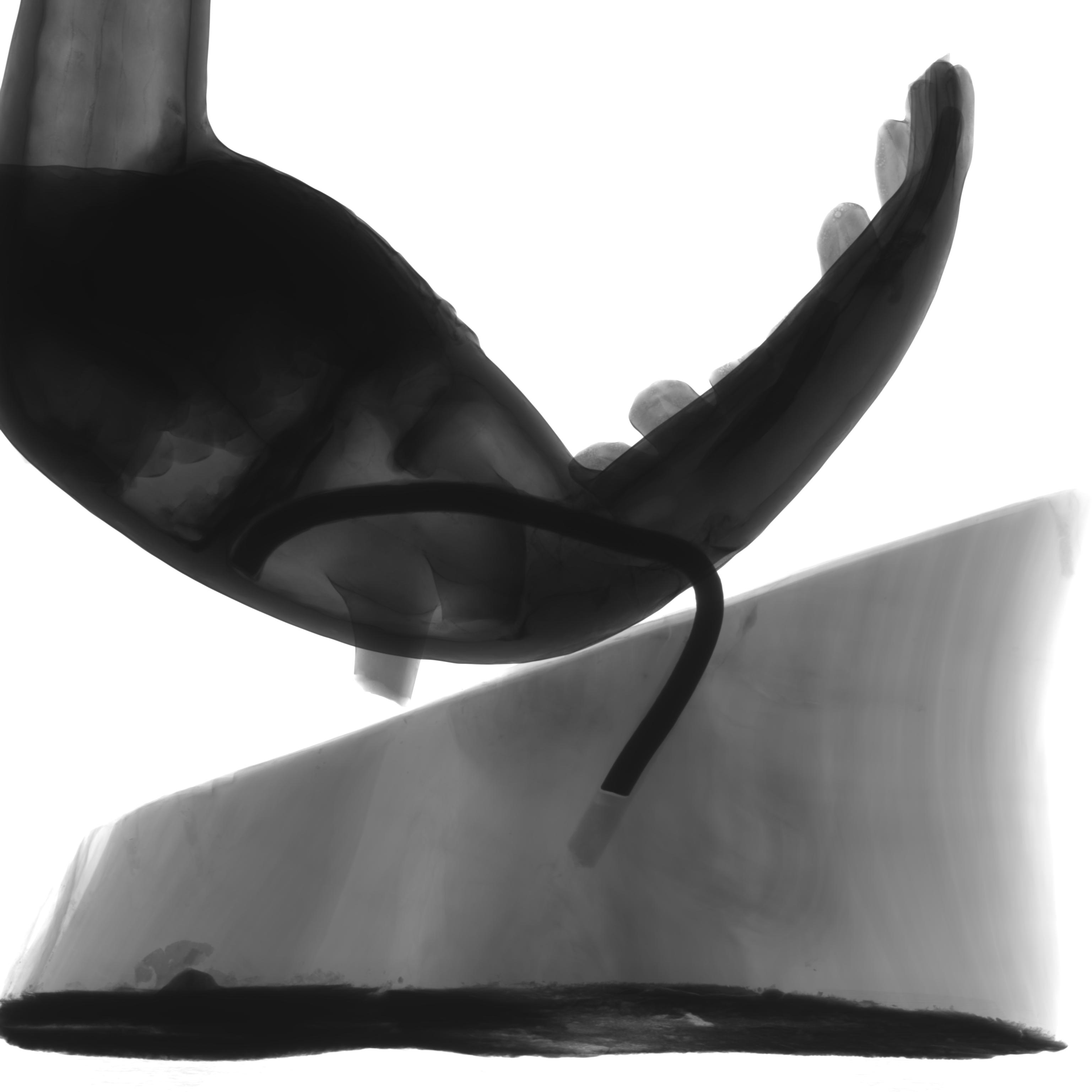
Figure 2: X-ray image to see how the metal rod is positioned in both the ceramic and the wooden base.
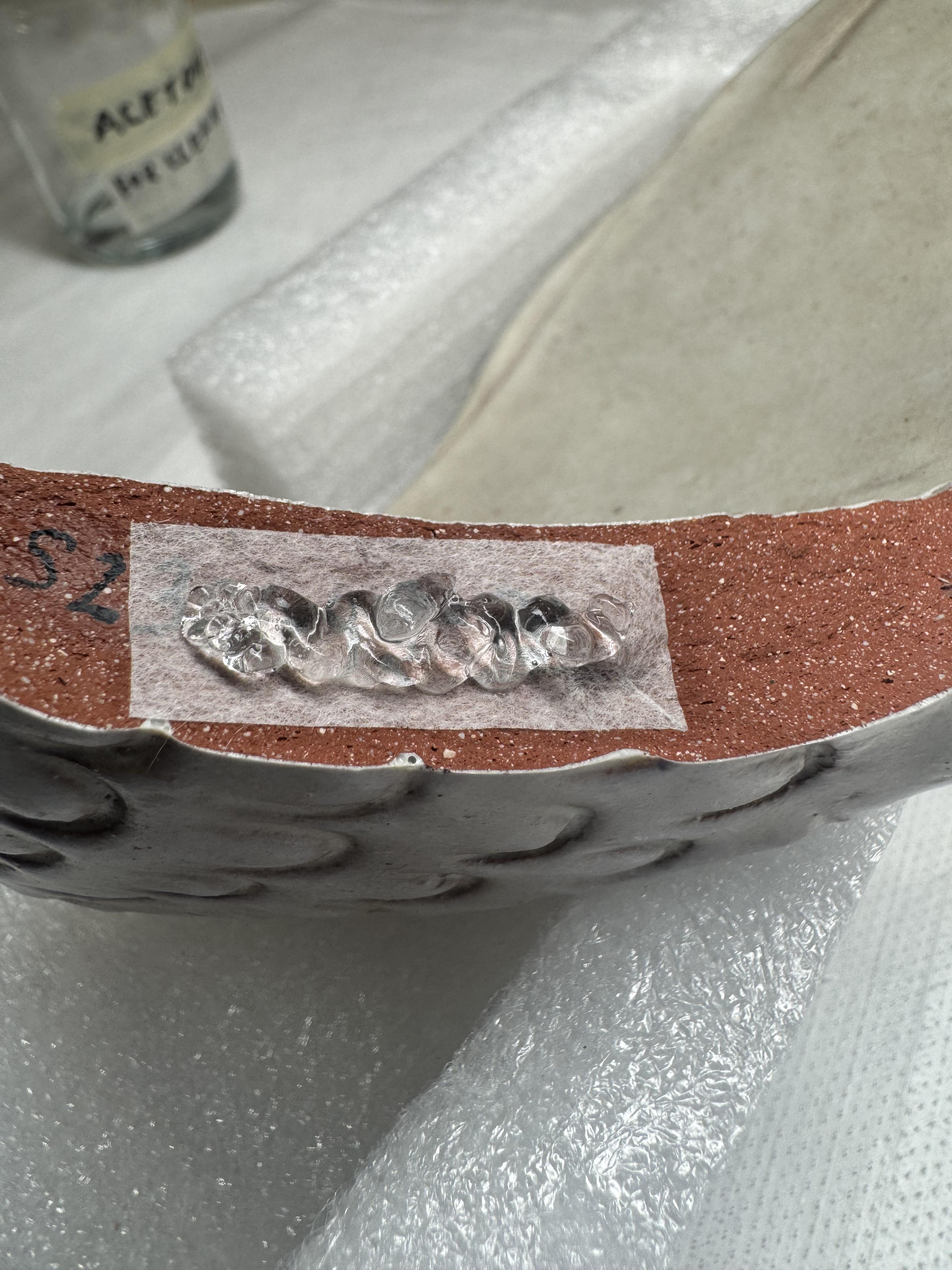
Figure 3: Laponite poultice test in an attempt to remove as much of the object number as possible from the break-edge.