Archaeological Glass Excavated in Amsterdam
Seperating and re-adhering the sherds.
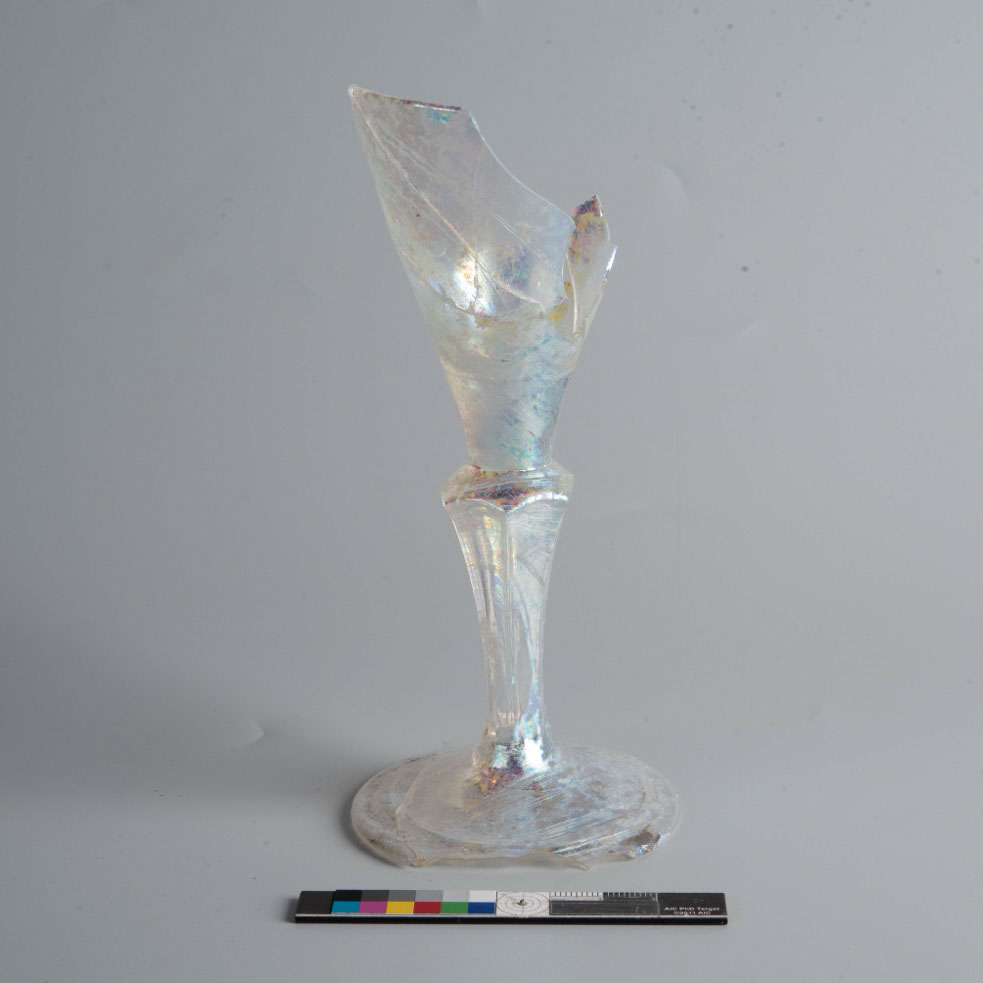
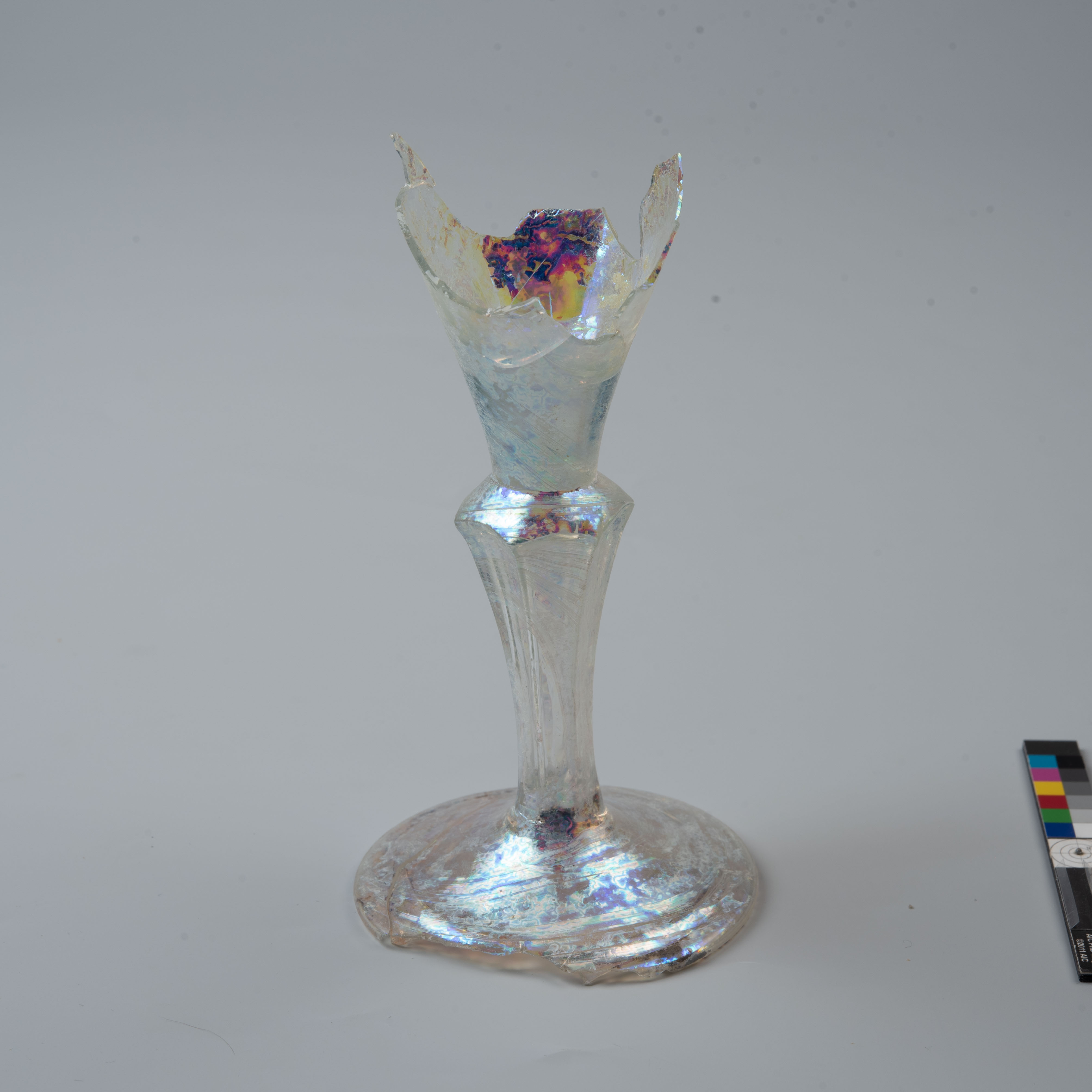
Figure 1: The archaeological glass before and after treatment.
Project Details
- Object owner: Gemeente Amsterdam
- Date: 1700-1750
- Period: Vroegmoderne tijd
-
Dimensions:
- Hoogte: 15 cm
-
Materials:
- Klucel H
- Benzylalcohol
- Paraloid B-72
- Colloïdaal silica
- Aceton
Conservation treatment
The archaeological lead-glass kelkglas was treated to achieve a stable, exhibition-ready join while respecting its iridescent, weathered surface. Because the iridescence layer was friable across the entire object, no pre-cleaning was attempted. Consolidation trials with 5% Paraloid B-72 in acetone proved visually too invasive so consolidation of the weathering laminae was intentionally avoided.
Previously, joins were made with a commercial two-component Bison epoxy. A 5% (w/w) Klucel H gel in benzyl alcohol was applied to the break edges, covered with clingfilm to limit evaporation, and left for approximately 73 hours in an attempt to remove the old epoxy adhesive. This softened the adhesive sufficiently for most sherds to be separated.
Re-assembly proceeded piece-by-piece using a 60% Paraloid B-72 solution in acetone, modified with 0.1% fumed silica. The high-strength B-72 formulation provided a fast-setting, reversible bond compatible with the objects condition; the fumed silica improved thixotropy and film formation, reducing bubbles and giving better control at the joins.
For display and handling, shock-absorbing transport, minimal manipulation, and stable conditions (RH 40-60%, 18-21 C) were advised.
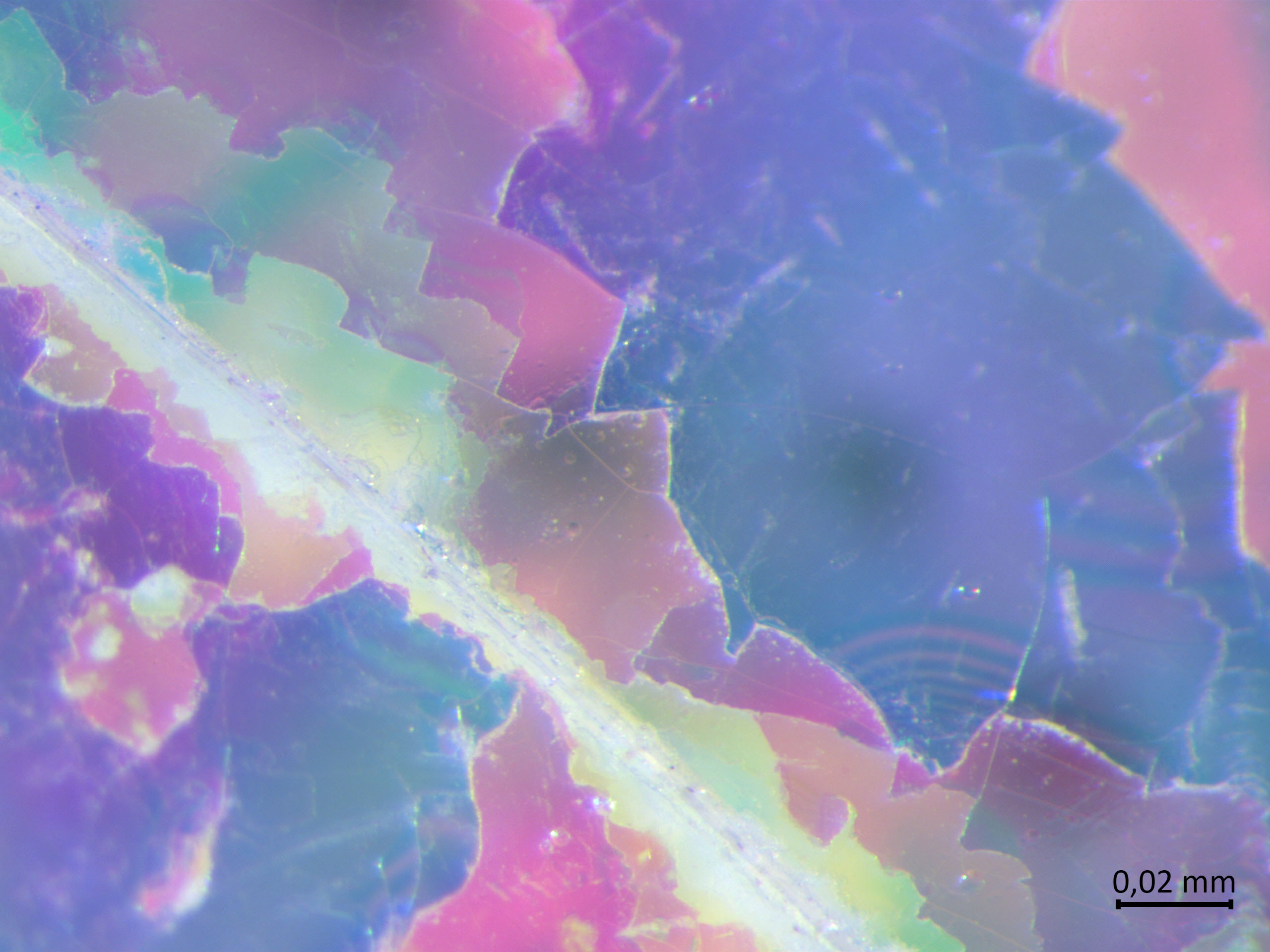
Figure 2: An microscope image showing the iridescent layer on the glass.
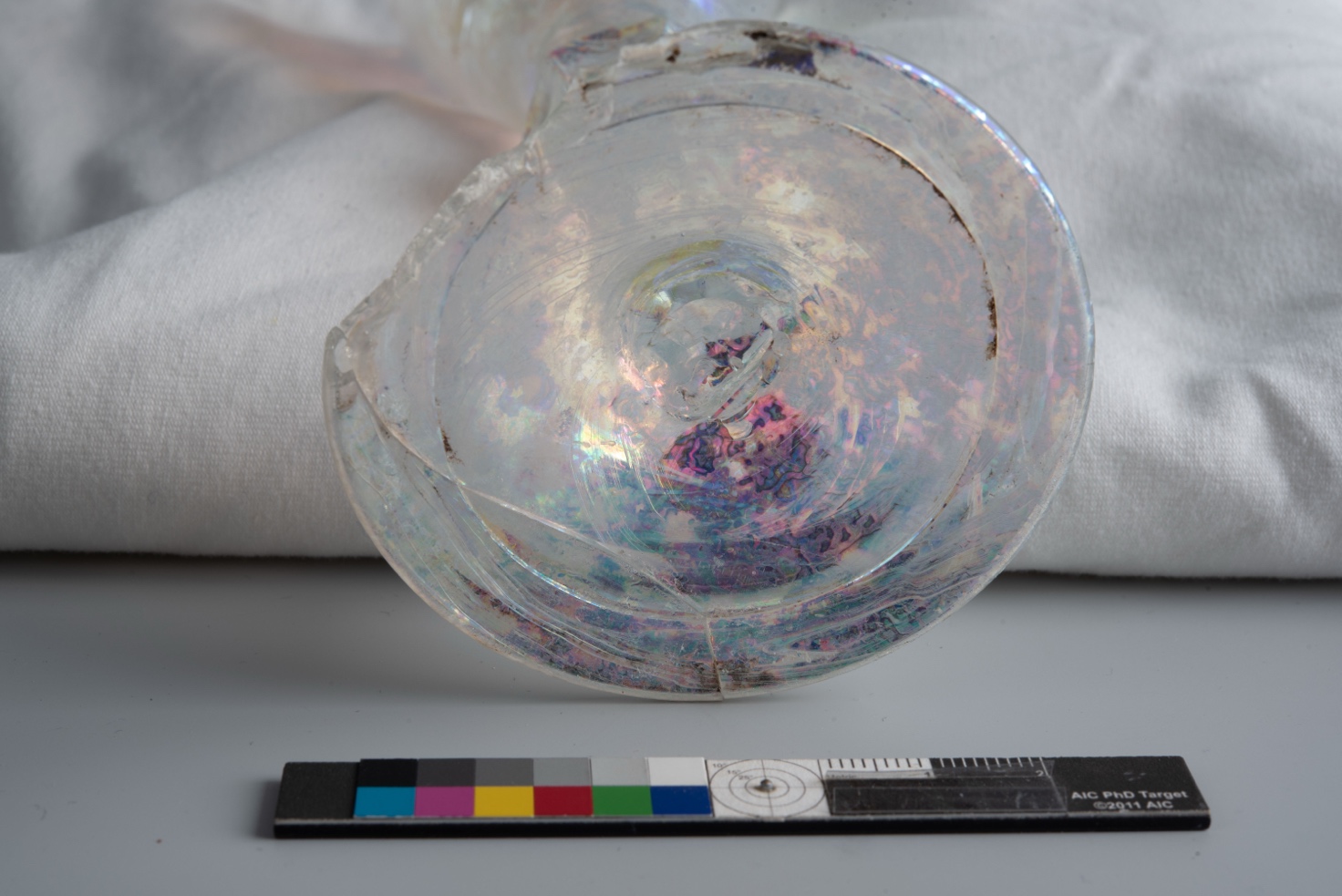
Figure 3: Close-up of the foot of the archaeological glass.